Wet fall weather can quickly shift soybean harvest priorities. Rain after maturity can raise grain moisture, weaken pods, increase shattering risk, and create conditions that reduce seed quality. Understanding these risks can help growers make timely harvest and storage decisions that protect market value.
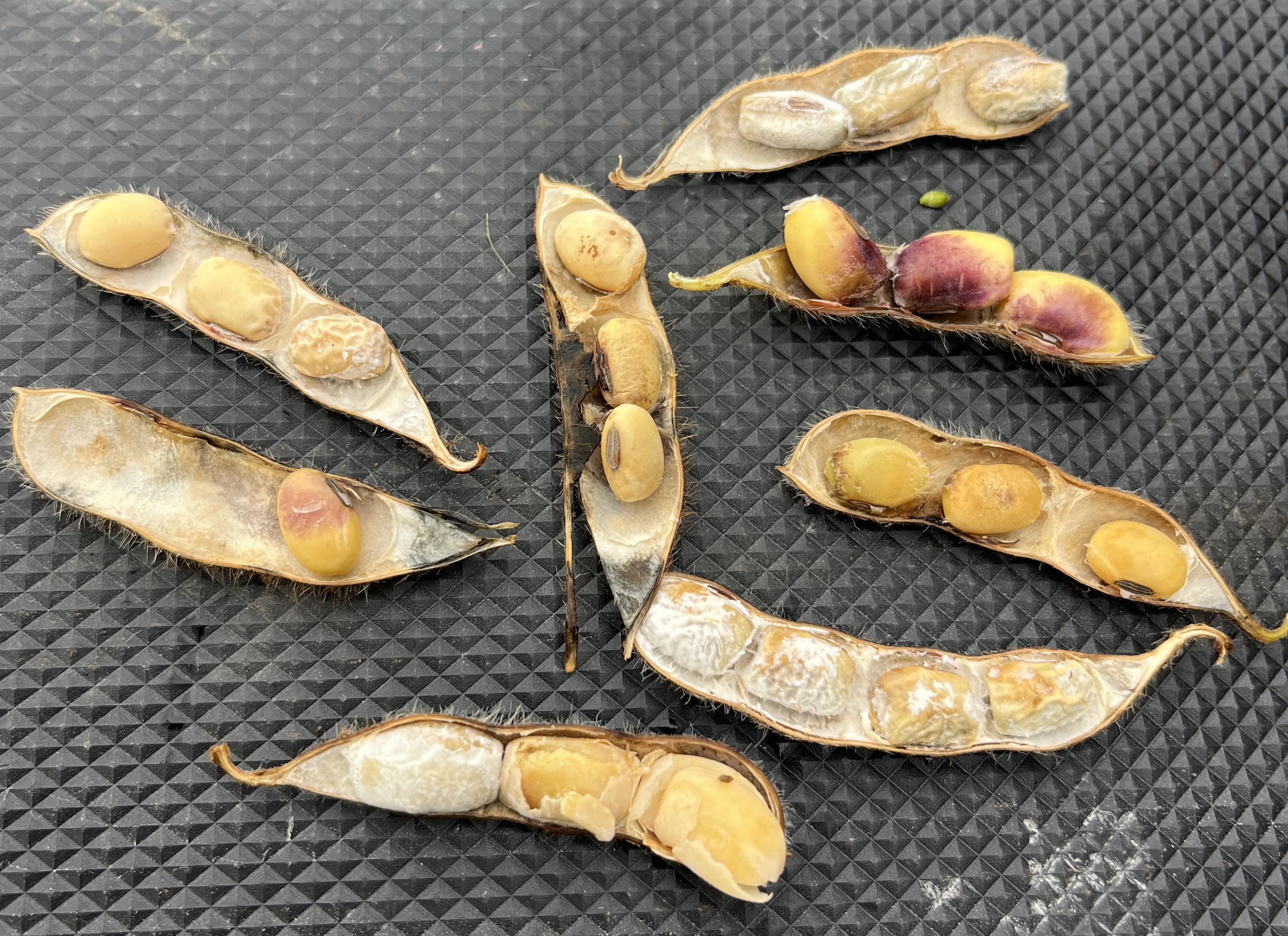 Figure 1. Seed pods from 2026 field demonstrating Shriveled seed, cracked seed coats, Diaporthe Seed Decay and Purple Seed Stain
Why Wet Harvest Conditions Increase Yield Loss Risk
Every rainfall event after soybean physiological maturity is essentially a mini-aging cycle for the seed. Late-season rainfall can reduce field drydown and cause mature soybean seeds to reabsorb moisture. Repeated wetting and drying can accelerate seed deterioration, weaken seed coats, increase disease infection, reduce seed vigor, and ultimately lower germination. The longer mature soybeans remain exposed to wet weather, the greater the risk for seed coat damage, pod splitting, and harvest loss. Risk will vary by field, variety, maturity, disease pressure, and how long pods remain wet.
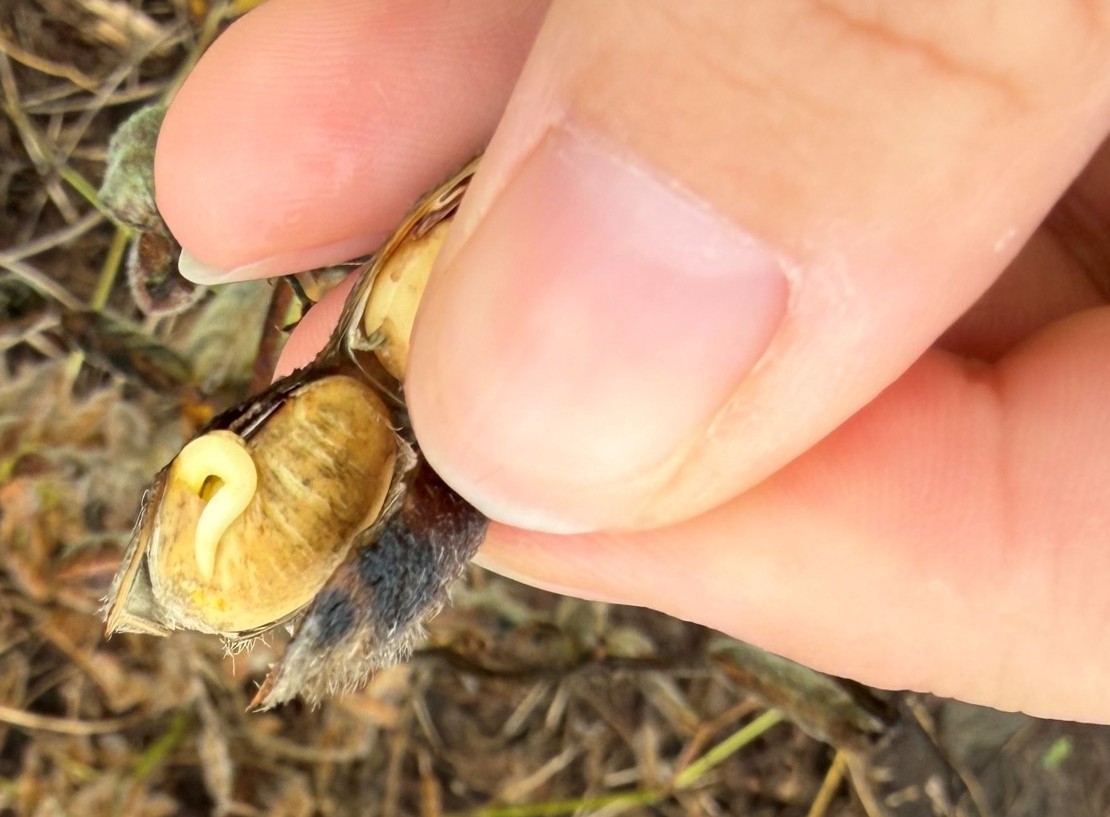 Figure 2. Seed pod from 2026 field showing sprouting seed.
Grain Quality and Disease Risks to Watch
Weather-damaged soybeans may show more splits, discoloration, damaged seed coats, reduced germination, and disease-related quality loss. Diseases such as Diaporthe (Phomopsis) seed decay, Purple Seed stain (Cercospora spp), Frogeye leaf spot seed infection, Anthracnose and opportunistic saprophytic fungi can contribute to lower seed quality and may affect oil or protein levels.
Quality discounts depend on local buyer standards, but excessive splits, staining, mold, or other damaged kernels can reduce soybean value at delivery. Fields with visible quality issues should be monitored closely and harvested as soon as conditions allow.
For seed production fields, standard warm germination may remain deceptively high during the first several weeks of delayed harvest, while seed vigor can fall below 50% within approximately one month under unfavorable field-weathering conditions.1 Research indicates fungicide seed treatments may help preserve germination in some poor-quality soybean seed lots by suppressing seed-borne fungal pathogens, although response varies by pathogen, seed quality, and environmental conditions.2 Foliar fungicide applications made between R3 and R5 may also help reduce seed infection and protect seed quality when disease pressure is present.
Minimizing Soybean Yield Loss After Wet Weather
Yield loss following an extended wet period before harvest is most often tied to pod shattering. After soybeans reach physiological maturity, the seams along the pod begin to weaken. Repeated wetting and drying from rainfall can further degrade those seams, making pods more likely to split open and drop seed before or during harvest.
Harvesting soybeans as soon as field conditions allow — even at slightly higher moisture levels — can help reduce shatter loss. Golden Harvest Agronomy soybean harvest timing trials have shown that harvesting at higher moisture levels can help reduce losses from shattering.
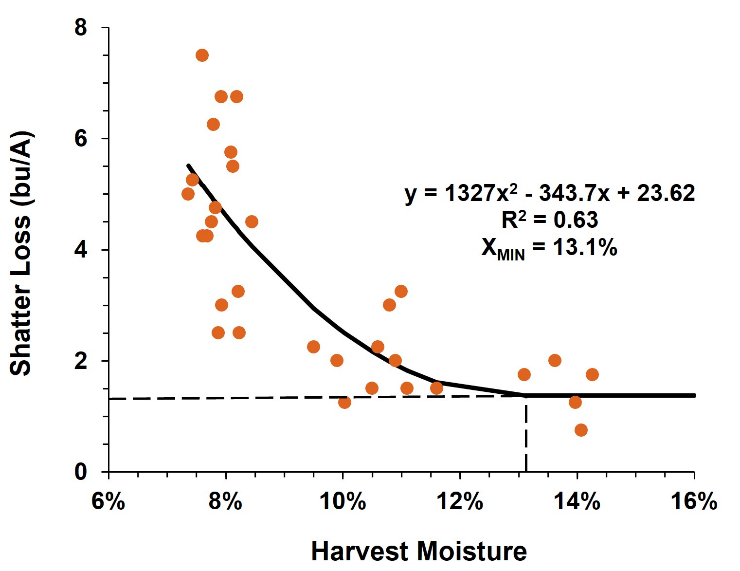 Figure 3. Golden Harvest Research Trial Illustrating Relationship between shatter loss and harvest moisture at Waterloo, NE in 2024.
Additional tips for minimizing yield loss:
- Prioritize fields that have already begun to shatter or have diseased pods.
- Harvest as soon as field and grain conditions are fit, even if grain drying or aeration will be needed.
- Check header and combine losses often, especially as moisture and plant condition change; make adjustments to minimize loss.
- Slow ground speed in lodged, short, or fragile soybeans to improve feeding and reduce header loss.
- Adjust reel speed and position to gently guide plants into the cutter bar without knocking seed loose.
Storage Management Tips For Protecting ROI
Segregate poor-quality soybeans from sound grain when possible. Mixing damaged beans with higher-quality grain can lower the value and storability of the entire bin.
- Dry soybeans to a uniform moisture level before storage. As a general guideline, aim for 13% moisture for winter storage and 11–12% for summer or longer-term storage.
- Cool grain to approximately 32–35°F when conditions allow and check multiple locations in the bin because temperature and moisture can vary.
- After cooling, seal bin openings to help prevent rain or snow entry.
- Continue monitoring grain for temperature changes, insects, condensation, mold, and other spoilage indicators.
Watch-Out: Compromised soybeans may need to be marketed sooner unless they receive more intensive storage management
Why Wet Soy Harvest Conditions Matter
For most growers, the biggest consequence of a wet soybean harvest is not just slower harvest progress — it is the potential loss of marketable grain value. Mature soybeans exposed to repeated wetting and drying are more prone to pod splitting, shattering, seed coat damage, discoloration, mold, and disease infection. These issues can increase harvest loss, reduce storability, and lead to elevator discounts or dockage when damaged grain is delivered.
Key Takeaway: Careful harvest timing, combine adjustment, and storage management can help limit these risks, but damaged grain may still face dockage or reduced market value. In addition, if wet conditions affect soybean seed production acres, reduced germination or vigor in seed lots may limit the availability of some varieties for the next planting season.
References
1 TeKrony, D. M., Egli, D. B., and Phillips, A. D. 1980. “Effect of Field Weathering on the Viability and Vigor of Soybean Seed.” Agronomy Journal 72:749–753.
2 Stoetzer, E., and D. Mueller. 2018. Should You Use a Fungicidal Seed Treatment on Low-Quality Soybean Seed? Iowa State University Extension and Outreach, Integrated Crop Management. December 6, 2018.
All photos are either the property of Syngenta or are used with permission