Double-cropping soybeans after winter wheat can boost whole-farm income and spread risk across two crops. It also tightens your margin for error—timing, moisture, and fast decisions are the difference between “worth it” and “why did I do this.”
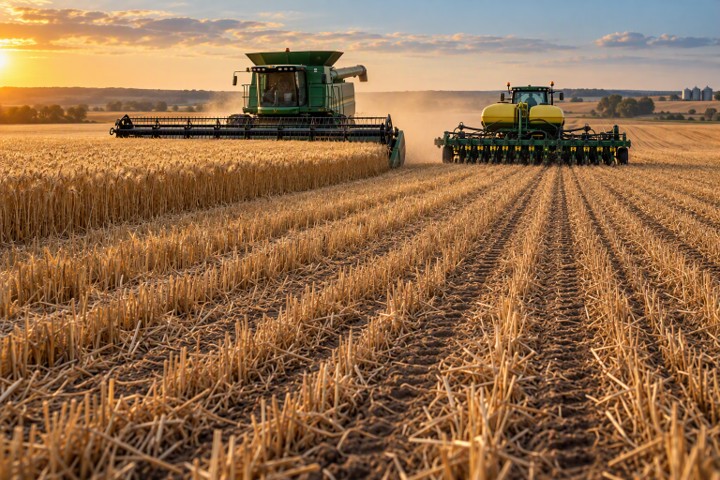 Double-cropping soybeans after wheat can add a second crop to the same field in one growing season
What is Double-Cropping and Why Do Farmers Do It?
Double-crop soybeans are planted immediately after harvesting an early-season crop, typically winter wheat, so you produce two crops on the same field in one growing season. When managed well, it can maximize land productivity, diversify income, and add agronomic benefits like extended ground cover, enhanced nutrient cycling, and improved soil health.
The Importance of Timing
Proper timing coordination between crops is the single most important factor determining double-crop profitability.
Plan around your calendar, not your hopes
- Know your area’s first average frost date and work backward to your latest viable soybean planting date
- Harvest wheat by mid-June to maximize soybean growing time.
- Plant soybeans immediately after wheat harvest.
- Each day of planting delay after mid-June can significantly reduce soybean yields.
Common mistake: Waiting to “see the forecast” before lining up seed, labor, and equipment—then losing days you can’t get back.
Soybean Variety Selection Tips
In a compressed season, variety choice becomes a crucial management decision.
What to Prioritize
- Mid to full-maturity soybean varieties.
- Sulfonylurea-Tolerant Soybean (STS) varieties resistant to Group 2 herbicide carryover commonly used in wheat.
- Goal: Prevent carryover symptomology that could damage your crop.
- Strong heat and drought tolerance to mitigate late planting conditions.
- High-quality seed + appropriate seed treatments.
- Seedlings remain susceptible to fungal pathogens and insects, even when planted later in the season.
Do You Have Enough Moisture to Get a Stand and Keep It?
Adequate soil moisture at planting is critical for establishment, and late-season moisture often decides yield.
What to consider
- Use no-till management to preserve existing moisture.
- If you have irrigation infrastructure, use it strategically to mitigate mid-summer drought stress.
- Monitor moisture continuously; in double-crop areas, late-summer drought stress—particularly in August—significantly affects crop performance.
How Do You Keep Weeds From Stealing Your Short Season?
Weeds don’t wait for you—especially when Growing Degree Days (GDD) are stacking fast.
Data and details that matter
- Burndown applications are critical for effective weed management
- Understand herbicide labels—growth can occur rapidly with fast GDD accumulation for both crop and weeds
- Timely, informed herbicide use prevents weeds from gaining a competitive advantage before crop establishment
What Are the Scouting Watch-Outs for a Compressed Season?
Double-cropping creates a narrow window where pests and pathogens can establish and multiply quickly.
Scouting cadence
- Scout at least weekly during critical growth stages.
- Early detection supports intervention while pests are below economic thresholds and diseases are still manageable
Key scouting priorities
- Foliar diseases(most commonly fungal) can defoliate plants and reduce photosynthetic capacity.
- Insect pests at various life stages can damage leaves, stems, roots, or developing grain.
- Soilborne pathogens affect root health and nutrient uptake.
- Weed pressure competes for resources and harbors secondary pests.
What Is a Realistic Yield/ROI Expectation?
Double-crop soybeans can be highly profitable when combined with wheat revenue, but yields can vary widely.
Primary drivers of success
- Planting date
- Growing season rainfall patterns
- Appropriate variety selection
- Overall management strategy throughout the season
Scenarios to Help You Evaluate Your Options
Wheat harvest slips into early July and soils are drying
Risk: Compressed season, poor emergence and higher late-season drought exposure.
What to consider: Immediate planting logistics, no-till moisture preservation, drought/heat-tolerant varieties, and irrigation if available.
Wheat herbicide program included Group 2 products
Risk: Carryover symptomology injures soybeans.
What to consider: STS varieties and label/rotation restrictions before planting.
Canopy stays wet during flowering/pod set
Risk: Faster disease development in a short response window.
What to consider: Weekly scouting discipline and timely intervention decisions.
In Summary: The Most Important Things to Get Right
Double-cropping soybeans after wheat rewards preparation and speed. Nail timing (harvest and immediate planting), protect moisture, and choose the right genetics (including STS where needed). Then back it up with disciplined weed control and at-least-weekly scouting.
Key takeaways: Timing is non-negotiable, moisture is your yield insurance, and variety/herbicide-fit decisions prevent avoidable stand and vigor losses.